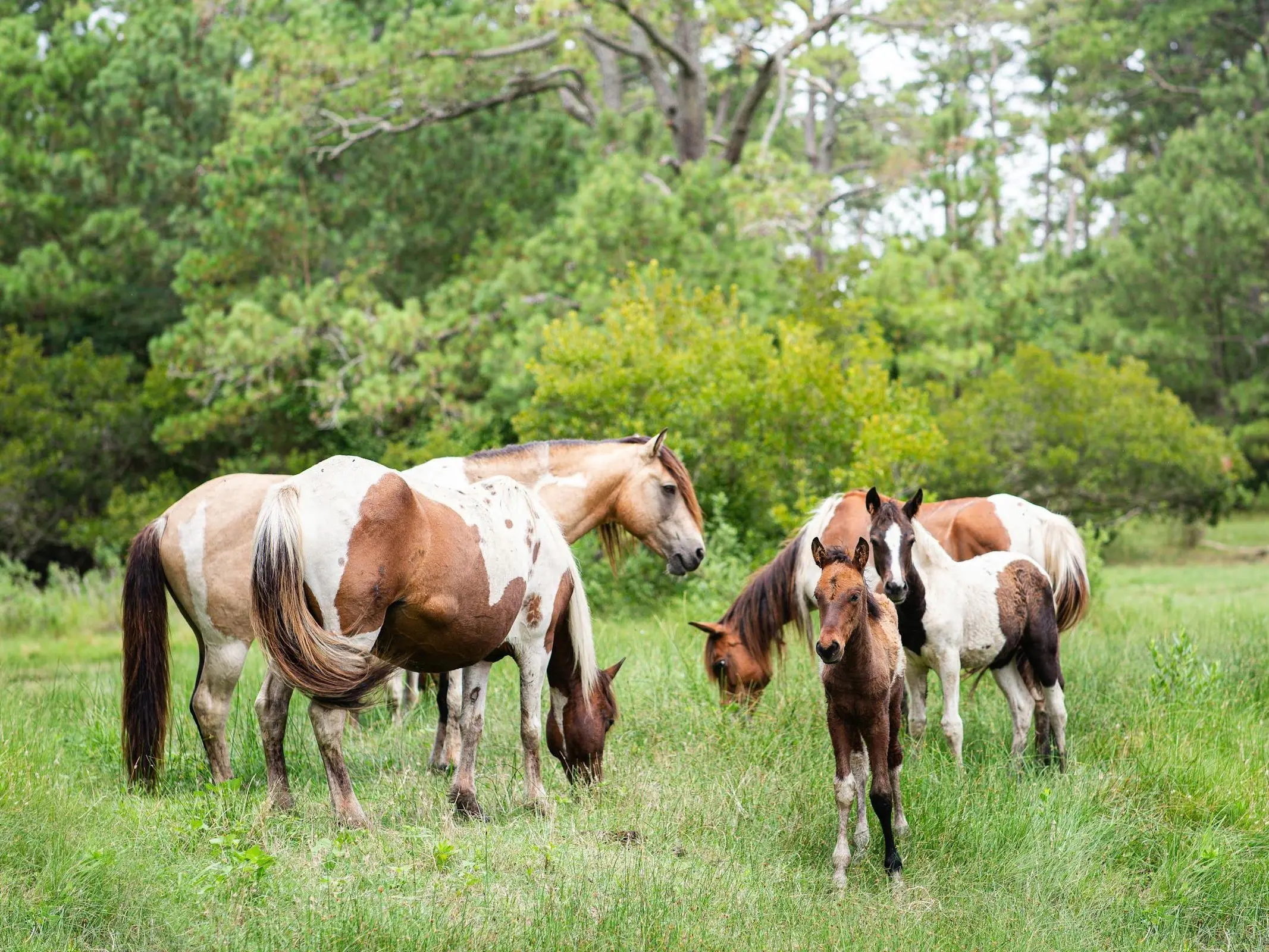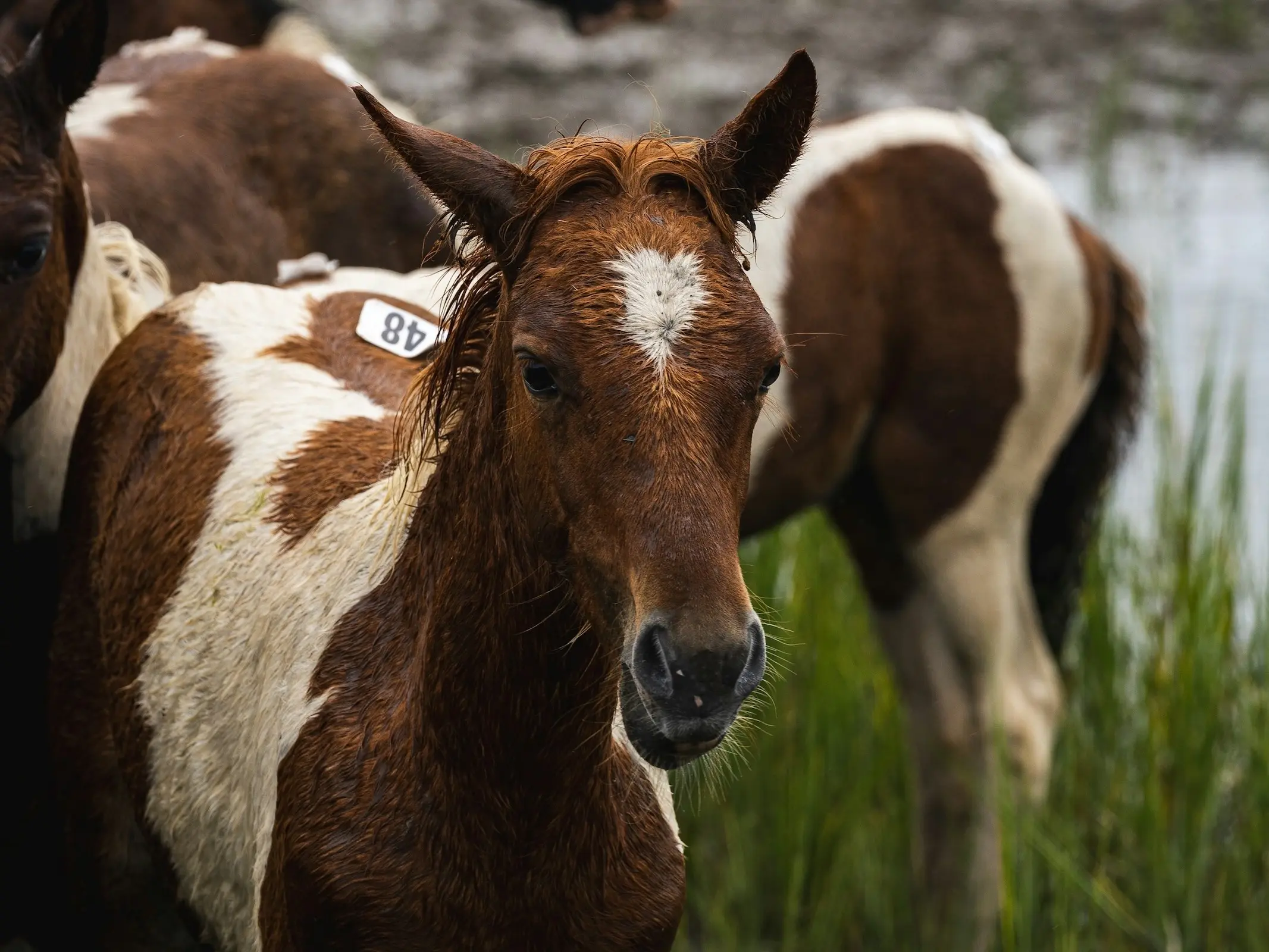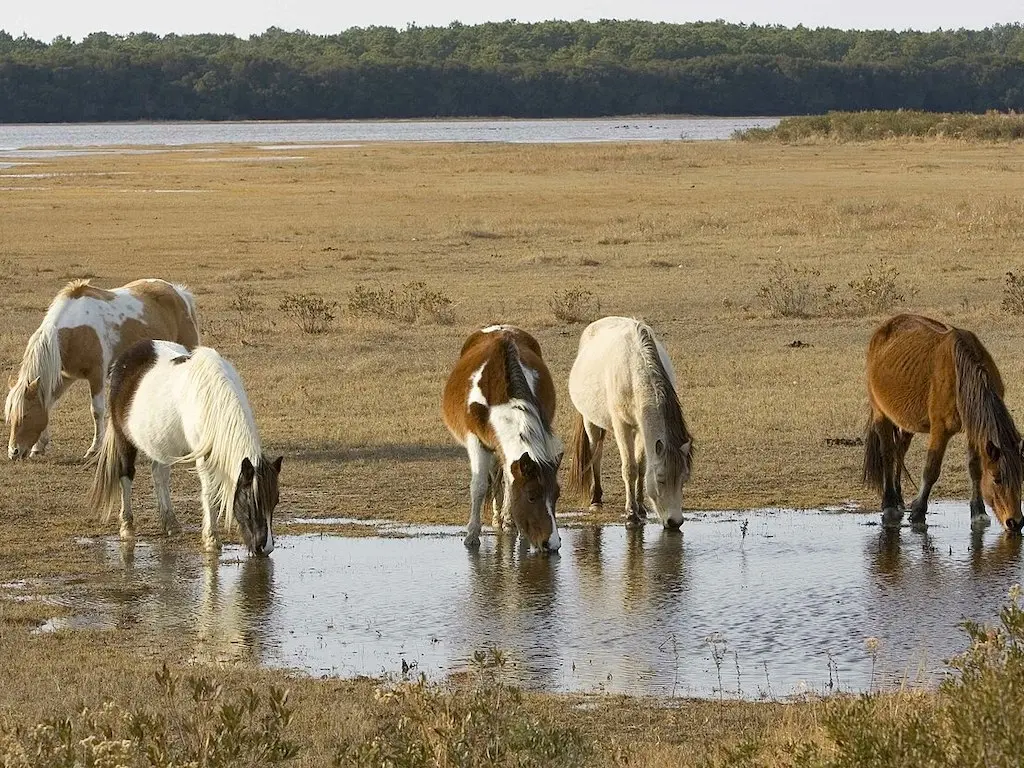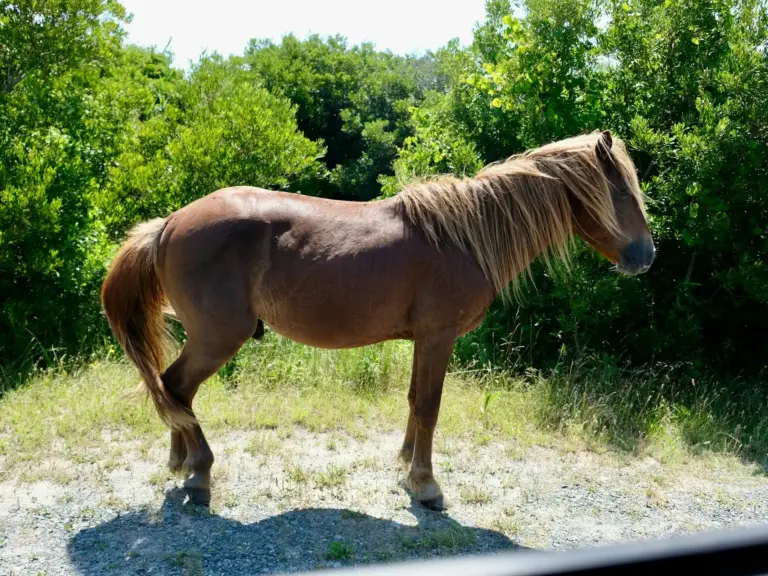
Assateague and Chincoteague ponies are essentially the same animals, they inhabit the island of Assateague off the coast of the Maryland – Virginia border.
Origins
There are several theories as to the origins of these animals, however their existence on the island has been documented back to around 1631.
In 1639 horses were imported to the colony, which was encouraged by local government until the sheer numbers became a burden on the local habitat. In 1669 horses were taxed by the local government and owners were required to pen them during late summer and early fall.
It was this taxation which created the Assateague – Chincoteague ponies. Planters began to take their horses to nearby islands to avoid the cost of taxes and fencing.
Too Many Mouths to Feed
By 1671 importation of horses to the local area was forbidden by law for three years and the unwanted horses were turned loose to live in the island marshes. Often domesticated animals were branded and turned loose with the herd to graze as well.
The herd on the Maryland side is managed by the National Park Service and the herd on the Virginia side is owned by the Chincoteague Volunteer Fire Company. They are permitted to graze on Chincoteague National Wildlife Refuge.
Pony Penning Carnival
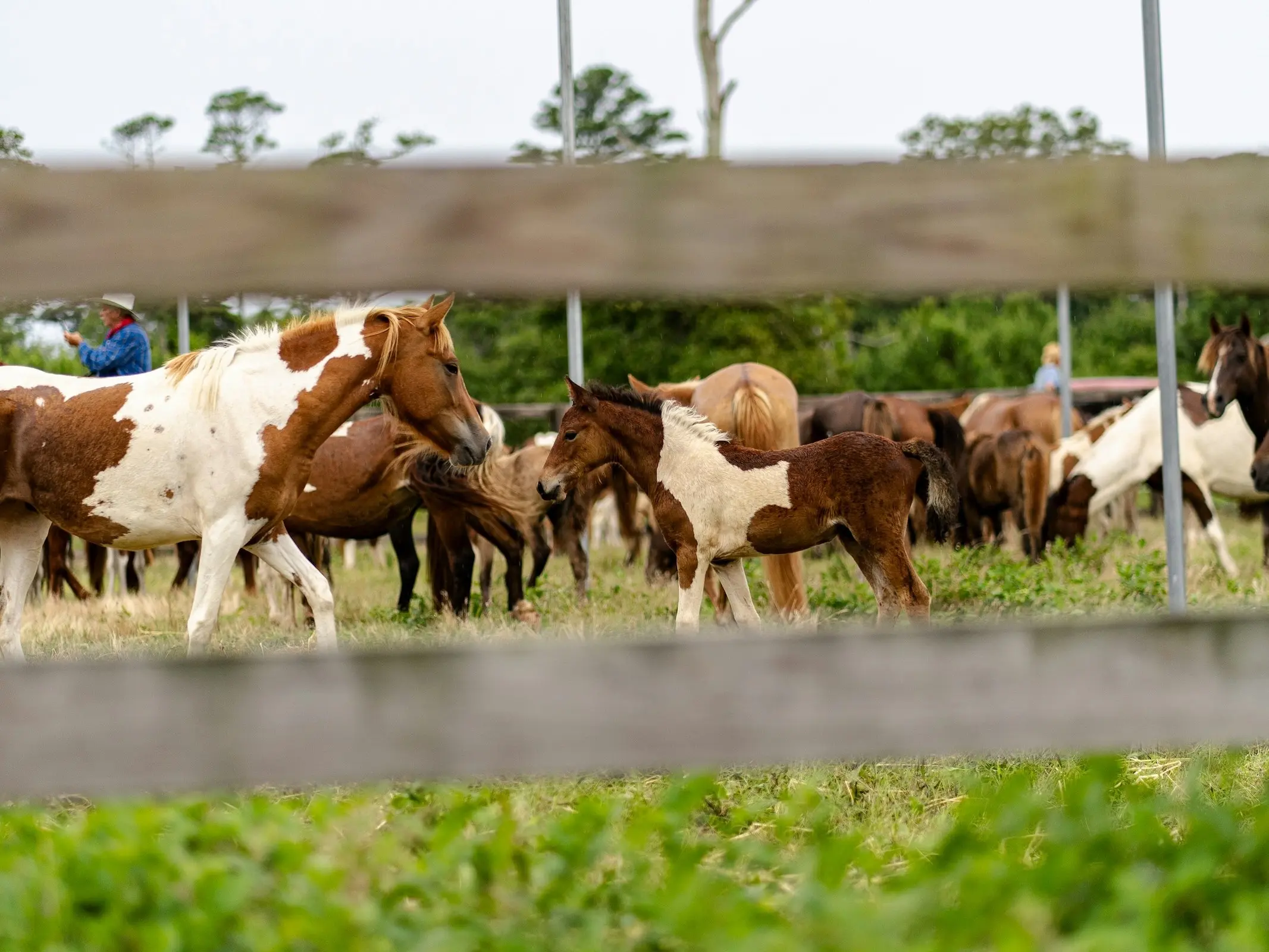
Every year during the last week of July, the ponies are rounded up for their famous swim to Chincoteague for the Pony Penning Carnival. During this week young, strong animals are auctioned off with proceeds going back to care for the herd. The remaining ponies are returned to Assateague. This practice keeps the pony numbers down and increases quality of life for the herd.
Through the years, storms and natural events have threatened this breed of pony, so today’s ponies have been influenced by the blood of other animals
Features
Average height 12 – 14 hands in the wild, when domesticated they can grow up to 16 hands
Independent and hardy through natural selection
Legs are slim, strong with good joints & hard feet
Physique
Head is small and refined
Eyes are widely spaced
Much of their diet is salt-rich marsh grass, because of this they drink twice the water of normal animals. This can cause them to look rather bloated.
Traditional Colors
Found in all common colors and Pinto is common
Temperament
Independent and hardy
Friendly when domesticated
Use
Riding pony
Pleasure mount
Show pony
Light farm work
Helpful Links
Chincoteague Pony Association
National Chincoteague Pony Association
Chincoteague Pony Swim Guide
Chincoteague Pony Centre
Pony Event Schedule
Misty’s Heaven
Chincoteague National Wildlife Refuge
Where to Buy
Assateague Island Pony Auction
More Images